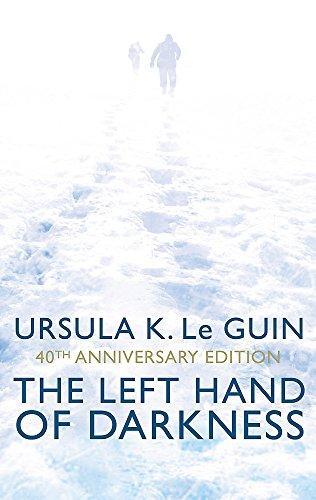

Elise reviewed The Left Hand of Darkness by Ursula K. Le Guin (DUPLICATE) (Hainish Cycle)
so dated, so fresh
4 stars
first off, just on gender politics alone it's really interesting. the assertion that Winter is a planet "with no gender" is a lie, and belies the dated conception of gender and gender roles of the 60s within which the book was concieved- yet in it's own way, without perhaps being as critical as I'd like, it holds a mirror to our own ideas of gender. I mean, a world where people that inject hormones to achieve their desired gender presentation? and those people are all literally referred to as capital-p Perverts by the rest of society? Does that sound familiar to you? And of course the usual le guin standards of multi-layered societal building, interrogation, and extrapolation through different points of view is always great stuff to chew on intellectually. Occasionally character exploration comes off weak because of all the page space needed to explore this, and I'm sure if …
first off, just on gender politics alone it's really interesting. the assertion that Winter is a planet "with no gender" is a lie, and belies the dated conception of gender and gender roles of the 60s within which the book was concieved- yet in it's own way, without perhaps being as critical as I'd like, it holds a mirror to our own ideas of gender. I mean, a world where people that inject hormones to achieve their desired gender presentation? and those people are all literally referred to as capital-p Perverts by the rest of society? Does that sound familiar to you? And of course the usual le guin standards of multi-layered societal building, interrogation, and extrapolation through different points of view is always great stuff to chew on intellectually. Occasionally character exploration comes off weak because of all the page space needed to explore this, and I'm sure if you don't find it captivating it would be a total bore of exposition dumps at times. It really worked for me though. Taking a break from my chronological readthrough of Le Guin's novels for my next read, but pretty excited to read Tombs of Atuan after that.